

Briefs
Below you will find links to our briefs where we highlight the key findings and policy implications of our research and field-building efforts.
A Second Look at the 2023–24 Civil Rights Data Collection: Early Findings on Advanced Coursework, Discipline, and School Staffing
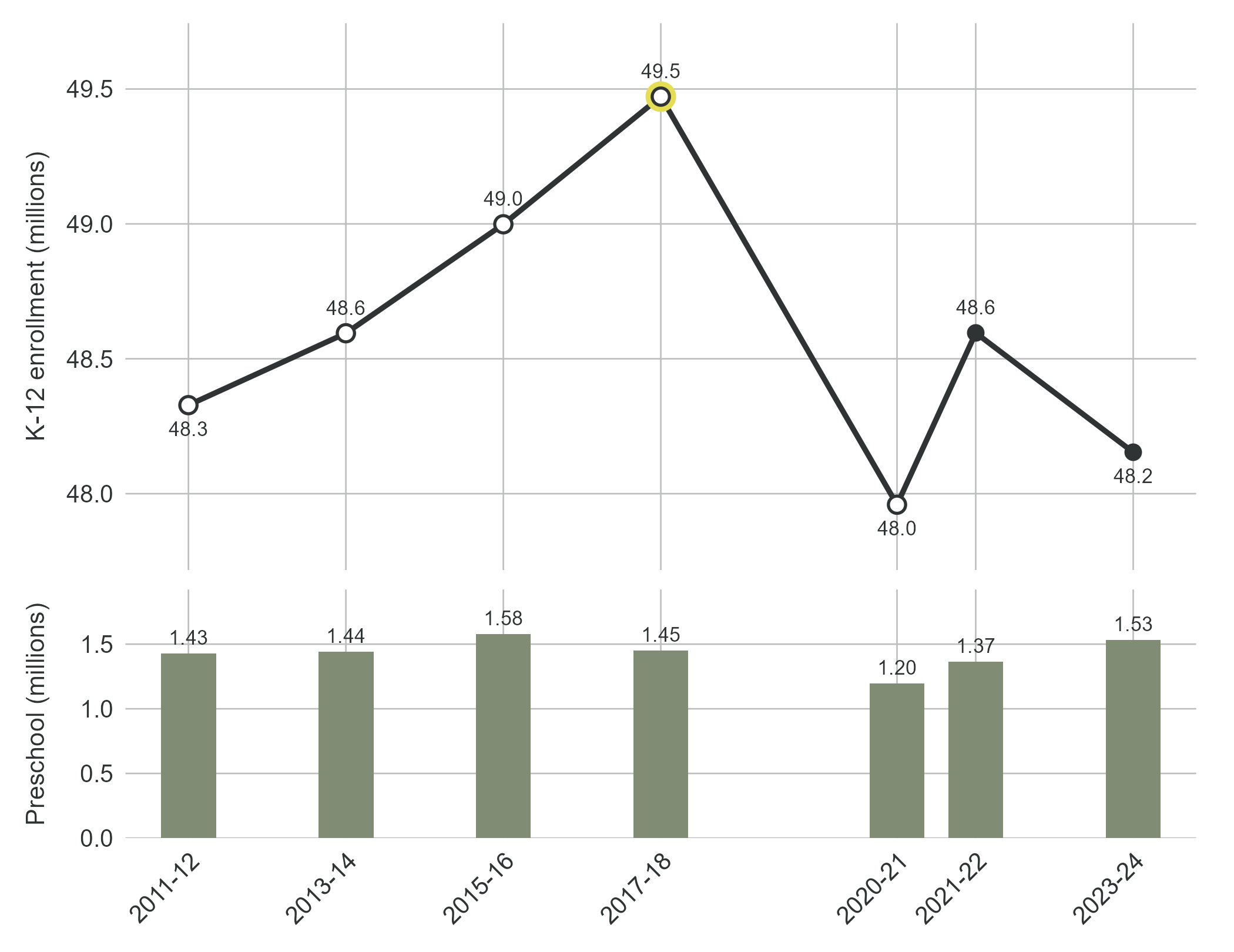
In August 2026 the Office for Civil Rights (OCR) released the 2023–24 Civil Rights Data Collection, the mandatory biennial survey of all public schools and districts in the United States. It includes data from 97,094 schools and reports enrollment, course access, discipline, and several other topics, each disaggregated by race, sex, disability and English-learner status. We described the release itself, and what it gained and lost as a measuring instrument, in a first brief. This brief includes early findings related to coursework, discipline and the educator workforce. We primarily compare the collection with the 2021–22 release of last year, using a harmonized file[1] that puts the two data collections on comparable terms. Additionally, we contextualize the enrollment figures in the longer CRDC series since 2011–12.
A First Look at the 2023–24 Civil Rights Data Collection: New Data and a Missing Count of Nonbinary Students
This brief gives a first look at what the 2023–24 release contains, sets out what the 2021–22 data recorded about nonbinary students — the only such public count the federal government has ever produced in the CRDC, and the baseline against which the 2023–24 suppression should be read — and closes with what the change means for the people who rely on these data, and for what the country can know about the experiences of nonbinary students in its public schools.
Who Takes Calculus Courses? An Analysis of CRDC Data From 2011-2021
Calculus is a core part of many college-going students’ high school experiences and may also be important for higher educational opportunities. Many students take it in high school as part of required or advanced-level coursework, especially in STEM-related fields or for K-12 students aiming to pursue a STEM-related field. Several factors hinder the ability for students to access quality calculus courses, such as their district and/or school offering few, if any, courses. Within schools, there might also be structures or practices impeding access to calculus and therefore affect whether students enroll in calculus if their school offers it. Equitably increasing student access to quality math, and specifically calculus, courses can help prepare students for the postsecondary life with the skills they need to succeed, whatever their own personal success looks like.


Corporal Punishment in Public Schools in the United States
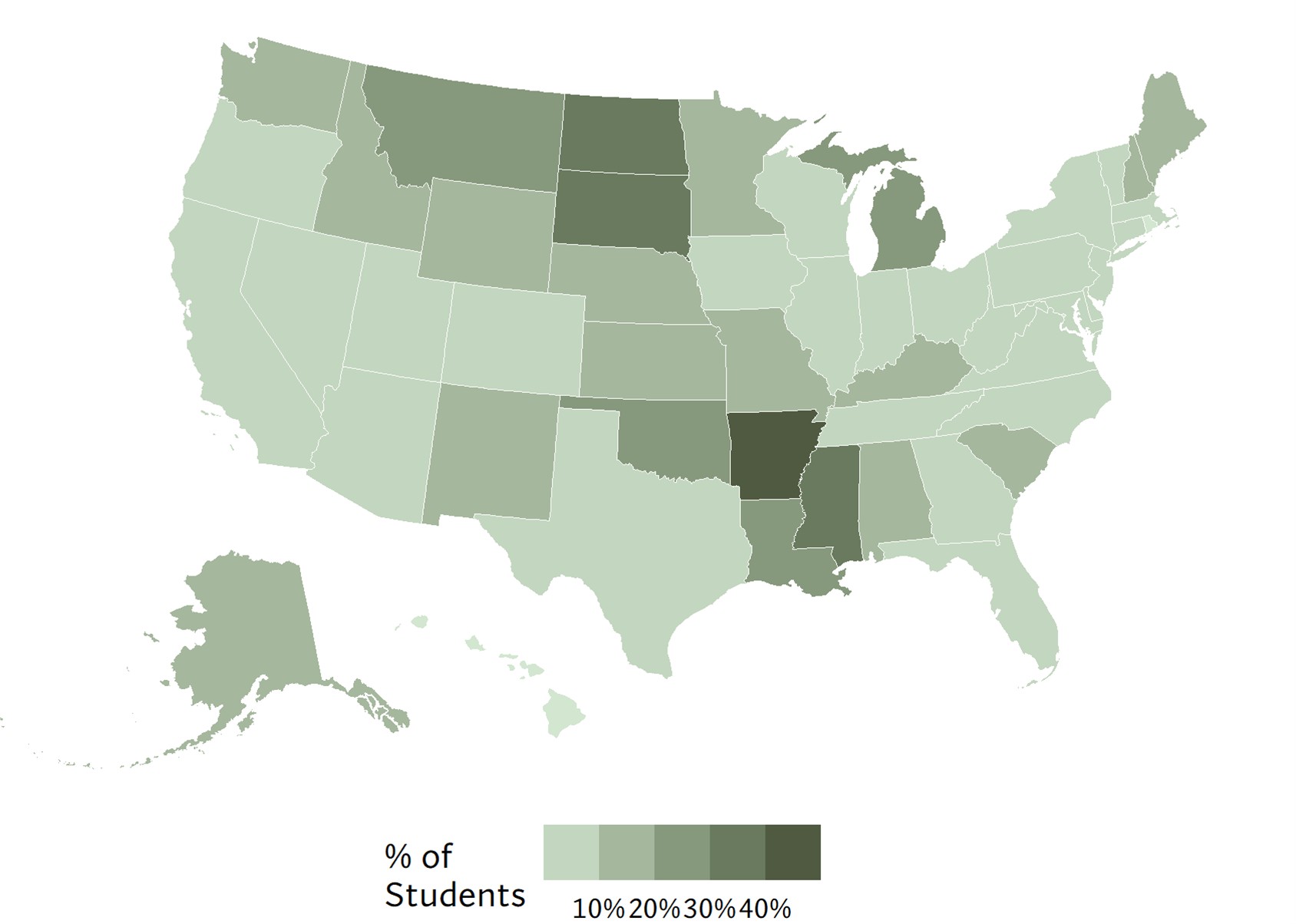
Corporal punishment has been present in public schools for decades. While certainly a diminished presence in 2025, it is still enshrined in state education statutes in at least 14 states as a legal way of disciplining students. This is in spite of research showing the harm in punitive disciplinary practices like corporal punishment (see here, here, and here). This brief will cover an overview of corporal punishment’s legal history, how corporal punishment has manifested in schools in the last several decades, and what it looks like today. For a snapshot of how state-level trends in CP by race/ethnicity has varied over the last decade, please our prior brief on this topic.